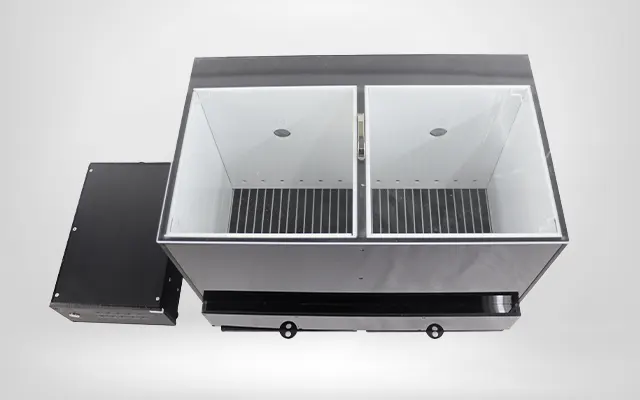
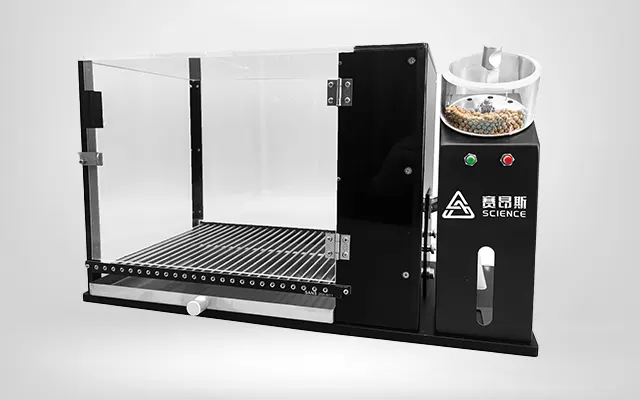
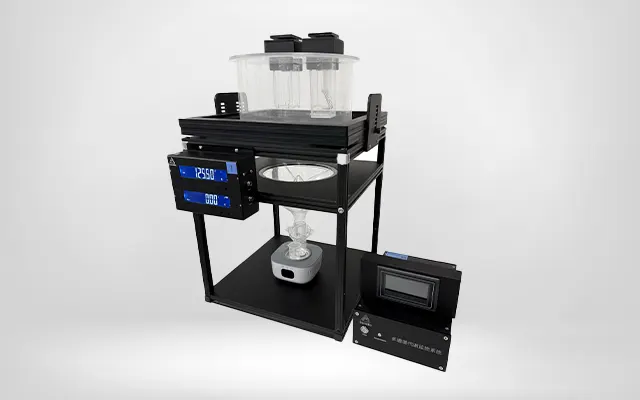
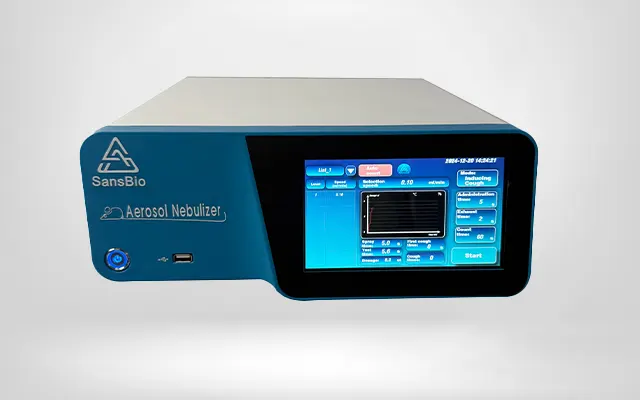
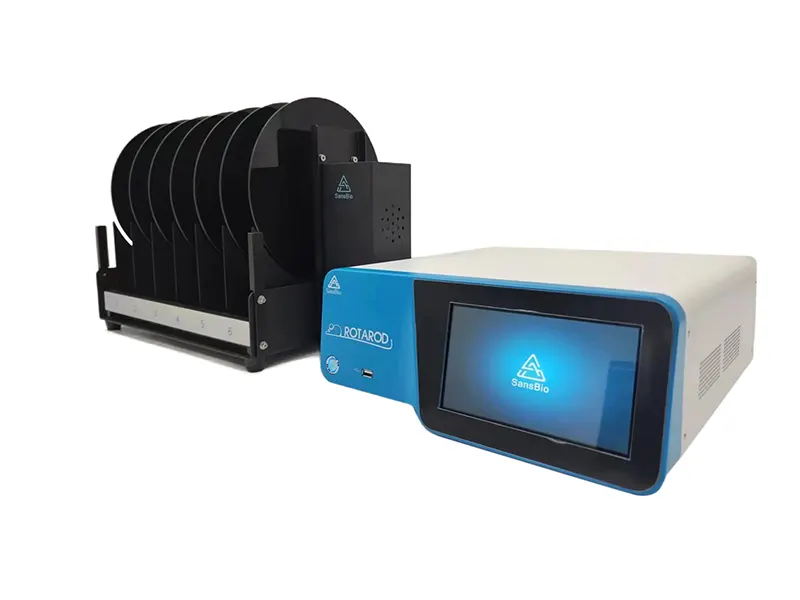
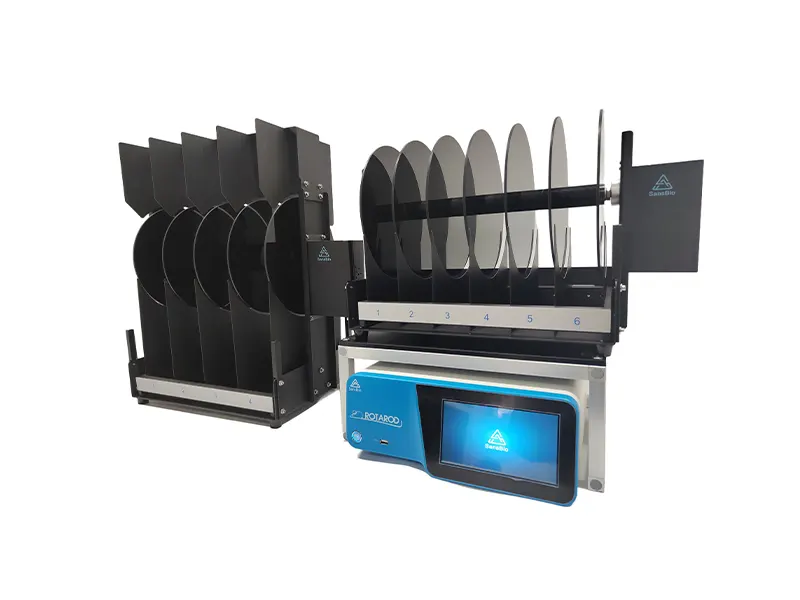
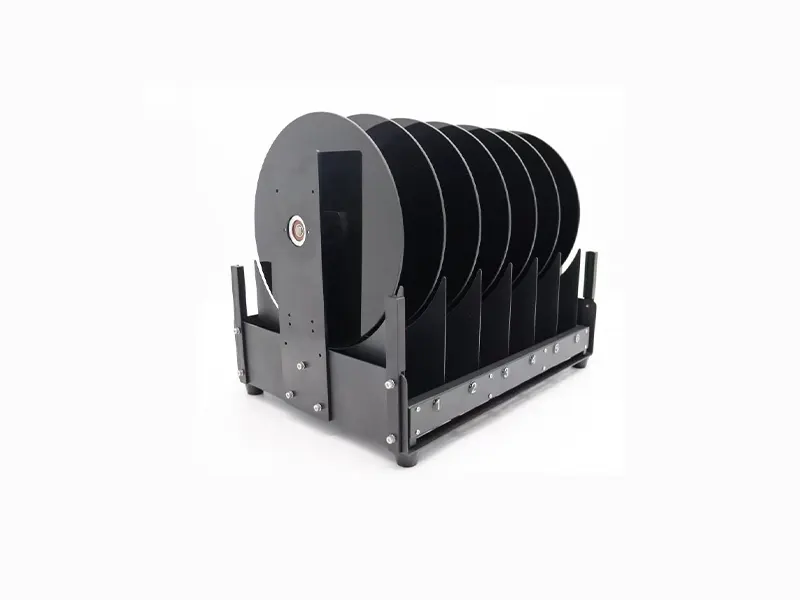
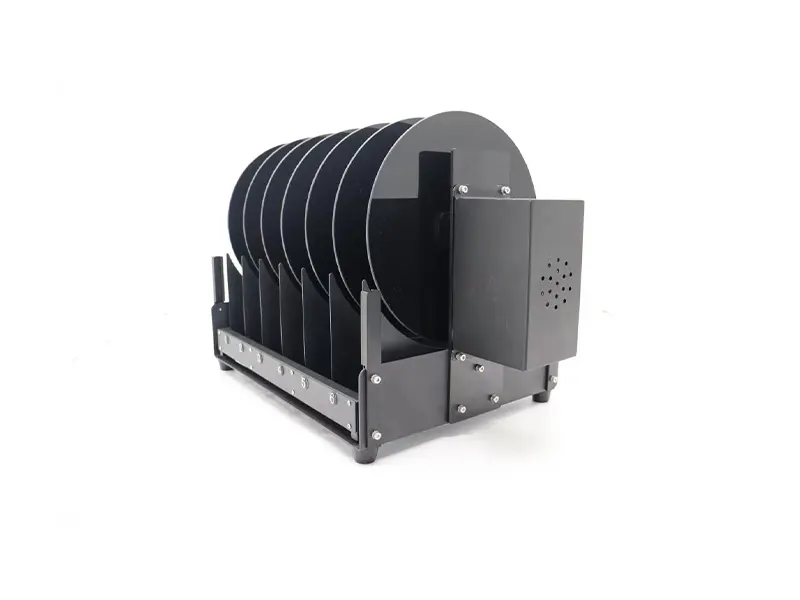
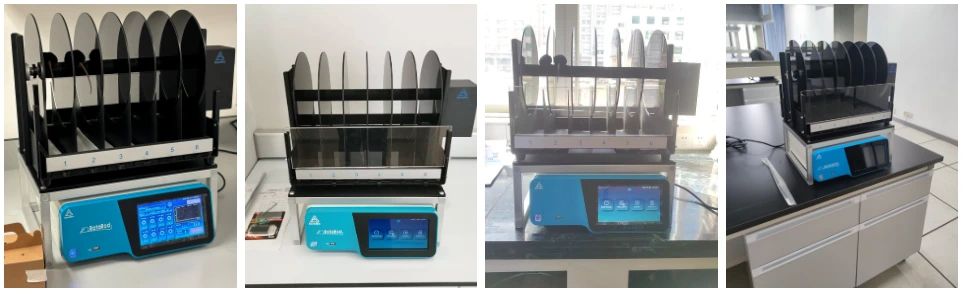
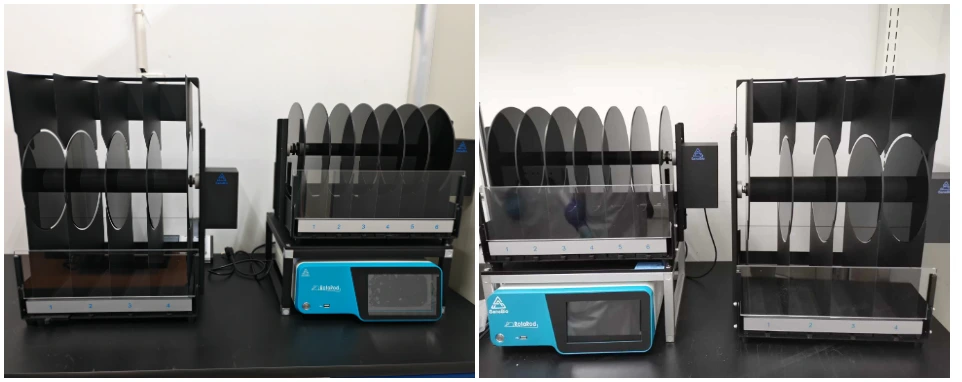
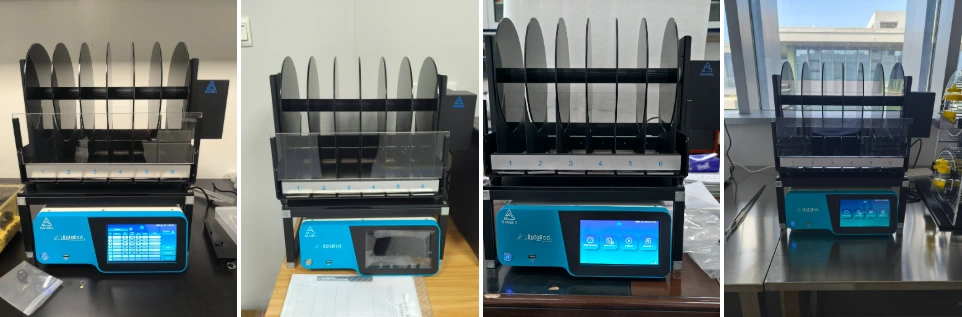
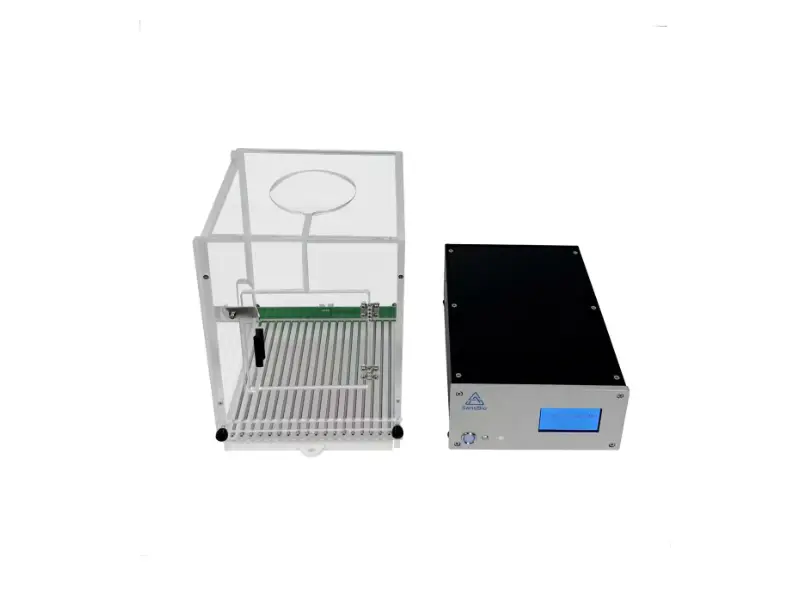
The RotaRod is mainly used for motor coordination, balance testing, anti-fatigue drug screening and identification testing, acted as the effective tool to assess motor performance in rodents using the natural fear of falling as motivation. Our RotaRod not only allows you easily switch to Rats or Mice by changing its frame. Also, it is a cost-saving RotaRod apparatus to do mouse and rat RotaRod performance test, and very easy to replace.
Applicable: 6 Mice or 4 Rats can be tested by using the same control unit.
In the test, a rodent is placed on a horizontally oriented, rotating rod. Due to the height of the rod, rodents will tend to remain on the rod as fear of falling. As it rotates, either at a constant or at an increasing speed, rodents are forced to run thus to remain on the rod.
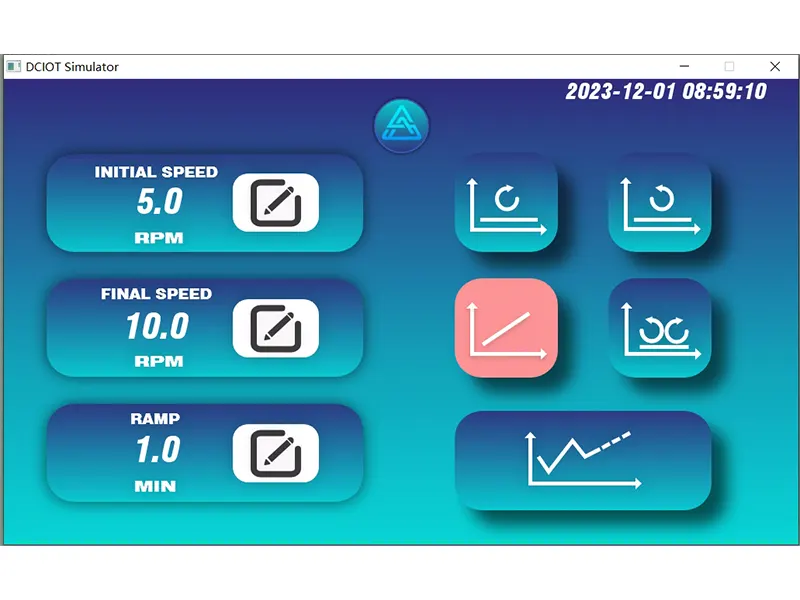
There are various rotation modes available in our RotaRod, constant, accelerating, rocking (back and forth) or through complex acceleration/deceleration ramps. The RotaRod can be switched to Rats or Mice by changing the rod frame only.
When the rodent falls off its cylinder section on to the plate below, the rotating time and the speed of falling will be recorded.
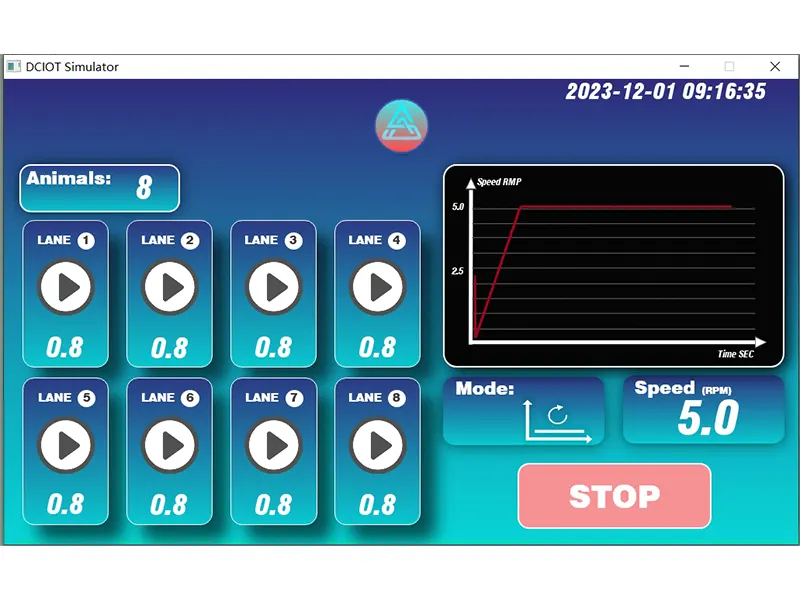
6 Mice or 4 Rats can be tested simultaneously and 8 protocols integrated in control unit to train and assess the motory coordination through the falling time.
Features and Benefits
| Features | Benefits |
| Controller and RotaRod frame separately | Cost-saving, switch flexible |
| 7 ” capacitive IPS LCD touch screen, resolution 1024*600. | Big touch screen to be very easy to get the experiment data and good sensitivity in touch. |
| Control unit and USB key saving | No need to connect to PC. |
| Constant, uniform acceleration, reverse ramp, custom ramp and rocking | ADAPTS to almost all coordination behavior and motor function experiments. |
| Precision IR Sensor | More accurate and sensitive for the detection. |
| 8 protocol configurations can be set in the experiment. | Can directly call the internal save experiment protocol, without setting up each experiment every time. |
| Speed range 0.05-100 RPMs, Step 0.1RPM | Be applicable for higher intensity test and more accuracy with 0.1RPM resolution. |
| Alone mode | Ensure the consistency of experimental data in each lane. |
| Automatic conversion of data into CSV files for the USB stick | Possibility to open files in Excel |
| >2000 data save | Large memory storage |
| Application | 6 mice or 4 rats |
| Commands | 7 ” capacitive IPS LCD touch screen |
| Power | 100-240 VAC, 50-60Hz |
| Sound Level | < 60 dB (A) |
| Mode | Constant, uniform acceleration, reverse ramp, rocking |
| Speed | Speed range 0.05-100 RPMs, Step 0.1RPM |
| Start/Stop | From the touch screen, TTL signal control |
| Detection | Precision IR Sensor |
| Revolution | Clockwise, anti clockwise |
| Test Time | 1~9999min |
| Protocol | 8 protocol configurations can be set in the experiment. |
| Projects | 8 projects to be saved 1~8 animals, includes animal ID, age, weight, gender and note. |
| Initial Test | 4rpm is initiated in start on to avoid the reverse and help the animal well get in the experiment |
| Fall Time Threshold | 0~100s |
| Output | Latency, Initial speed, Final speed, ACC speed, Drop speed, Revolution, Ramp, Rotating mode. |
| Data Export | By USB flash drive |
| Data Storage | > 2000 datas |
| – | Mice (SA102M) | Rats (SA102R) | Large Rats (SA102L) |
| Lanes | 6 lanes | 4 lanes | 3 lanes |
| Rod Diameter | 30mm | 60mm | 90mm |
| Rod Width |
56mm |
86mm |
120mm |
| Fall Height |
20mm |
30mm |
30mm |
| Size |
51×28×35cm (L x W x H) |
51×28×57cm (L x W x H) |
| Weight | 11kg | 14kg | 14kg |
| Controller Size | 27×30×13cm (L x W x H) | ||
| Controller Weight | 6kg | ||
| Power | 60W | ||
Q: Is this RotaRod apparatus suitable for both mice and rats?
A: Yes. Our RotaRod is designed for both mice and rats. Users only need to replace the rat or mouse rotating rod chamber and switch between mouse or rat mode via the controller interface. No recalibration of experimental parameters is required, allowing fast transition from Rat RotaRod to Mouse RotaRod.
This flexibility makes it an ideal RotaRod for mice and rats in motor coordination and balance studies.
Q: Can the RotaRod be integrated with other device?
A: Yes. We can offer this customization. The RotaRod can be integrated with other preclinical research device, including metabolic cage systems, behavioral video tracking software, and optogenetics, chemogenetics setups.
All experimental data can be exported in .csv format, enabling seamless statistical analysis and synchronized multi-system studies. This makes the system suitable for complex rodent motor coordination test protocols combined with metabolic or neural modulation experiments.
Q: Does the RotaRod apparatus support customized experimental protocols?
A: Yes. Our SA102 RotaRod supports fully programmable protocols within a single experiment session. Users can configure:
• Constant speed mode
• Constant acceleration mode
• Constant deceleration mode
• Mixed mode
• Rocking mode
Rotation direction can be set to clockwise, counterclockwise, or rocking. Speed range: 0.1–100 RPM.
These programmable options make the system suitable for standard Accelerating RotaRod tests, fatigue studies, and advanced motor learning paradigms.
Q: Is this RotaRod easy to operate for beginners?
A: Yes. The SA102Pro RotaRod features an intuitive control interface. Switching between mouse and rat mode requires only replacing the rod chamber and selecting the corresponding species mode on the touchscreen. No complex parameter reconfiguration is needed, making it user-friendly for new laboratory personnel.

Q: Is experimental data saved in RotaRod traceable?
A: Yes. Our RotaRod can internally store more than 2000 data, including:
• Latency to fall (time on rod)
• Rotation count
• Total distance traveled
• Falling speed
• Falling acceleration
• Animal information (ID, grouping, etc.)
This ensures full data traceability and supports laboratory quality control requirements for RotaRod performance analysis.
https://www.nature.com/articles/s41422-020-0314-9
https://www.nature.com/articles/s41401-021-00713-5
https://www.nature.com/articles/s41419-022-04782-0
https://www.sciencedirect.com/science/article/abs/pii/S0304394023005128
https://www.sciencedirect.com/science/article/abs/pii/S0304389422016119
Melatonin MT1 receptors regulate the Sirt1/Nrf2/Ho-1/Gpx4 pathway to prevent α-synuclein-induced ferroptosis in Parkinson’s disease
Dysfunction of Akt/FoxO3a/Atg7 regulatory loop magnifies obesity-regulated muscular mass decline
LRRK2 G2019S promotes astrocytic inflammation induced by oligomeric a-synuclein through NF-kB pathway
6-Gingerol Alleviates Neonatal Hypoxic-Ischemic Cerebral and White Matter Injury and Contributes to Functional Recovery
Celastrol protected the MPTP-injected mice Parkinson’s disease model via redox regulation of CDC37
| Item No. | Product Description |
| SA102 | RotaRod for both Rats and Mice |
| SA102M | Mouse RotaRod (6 lanes) |
| SA102R | Rat RotaRod (4 lanes) |
Quality First, Cost Effective, Reputation Above All.
11th Floor, Xiangbin Building, No.18, West Free Trade Street, Shenzhen, Guangdong Province, China.